top of page
Resilient Airport Systems: Digital Twin for ATL
Developed as part of Georgia Tech’s interdisciplinary Smart Cities Workshop, this team project explored how a digital twin could support operational resilience at Hartsfield-Jackson Atlanta International Airport. The framework combined high-frequency flight data, agent-based modeling, disruption scenarios, and operational KPIs to examine how passenger flows, congestion, equipment failures, and schedule disruptions propagate through the airport system.
This was my first Nexus-style collaboration bridging City Planning and Aerospace Engineering and introduced me to systems thinking, digital twins, and engineering simulation in a real transportation context. My individual contributions included literature review on agent-based modeling and airport resilience, case study and problem formulation, ATL flight-data collection and cleaning, findings synthesis, and interpretation of simulation results.
Project type
Digital Twin, Systems Modeling & Resilience
Date
Fall 2025
Location
Atlanta, Georgia
Skills & Tools
Digital Twins • Agent-Based Modeling • Airport Resilience • Transportation Systems • Systems Engineering • Simulation • AnyLogic • Python • API/Data Processing • Decision Support • Smart Cities • Interdisciplinary Research
Team & Collaboration
Interdisciplinary Georgia Tech team spanning City & Regional Planning, Aerospace Engineering, and related systems research. The project was completed through the Smart Cities Workshop under faculty advisors Dr. Dimitri Mavris, Dr. Michael Balchanos, and Prof. Perry Yang. Team members included Kamyar Fatemifar, Qinghao Zeng, Zhuoqi Helen Dong, Zhaoxin “Jenny” Ma, and Sabastian Ayimbila Abelezele.
My individual contributions included literature review on agent-based modeling and airport resilience, case study and problem formulation, ATL flight-data collection and cleaning, findings synthesis, and interpretation of simulation results.

01
Resilient Airport Systems: Digital Twin for ATL

01
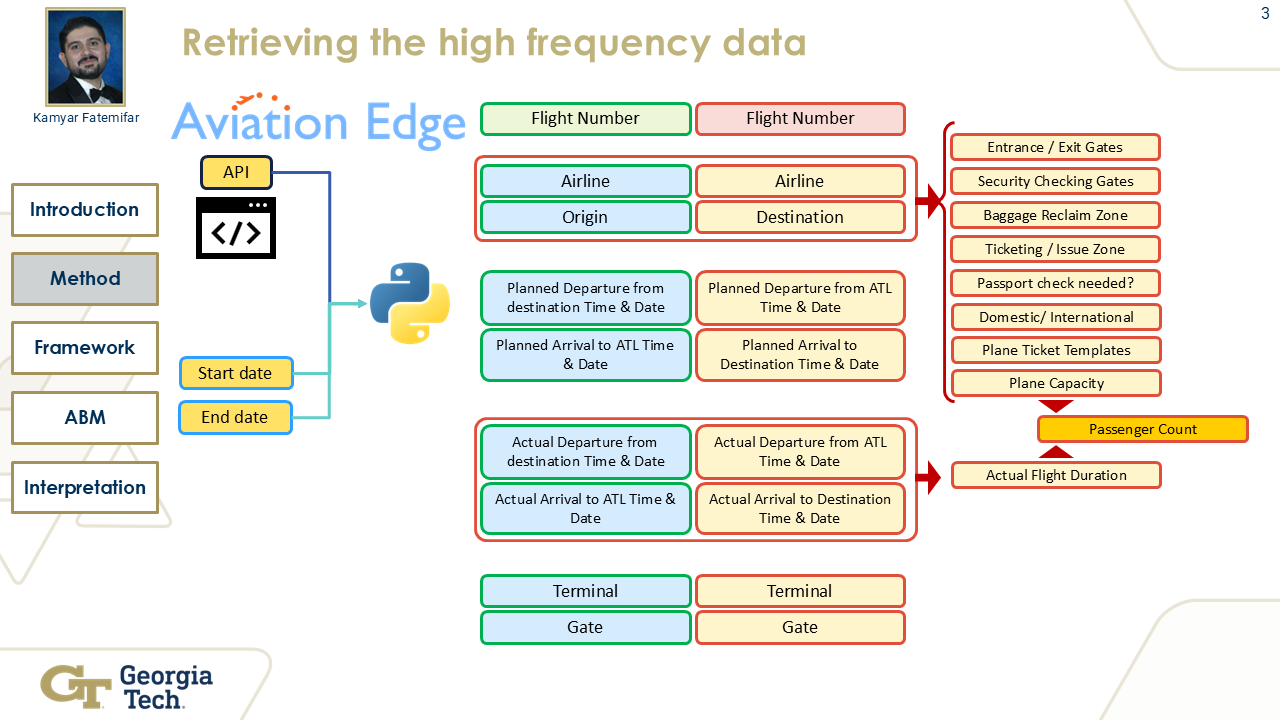
ATL Flight Data Acquisition & Processing
High-frequency aviation data were transformed into simulation inputs including airline, origin and destination, scheduled and actual flight times, terminal and gate information, flight duration, and estimated passenger counts. My contributions included ATL flight-data collection, cleaning, and preparation for downstream analysis.

02
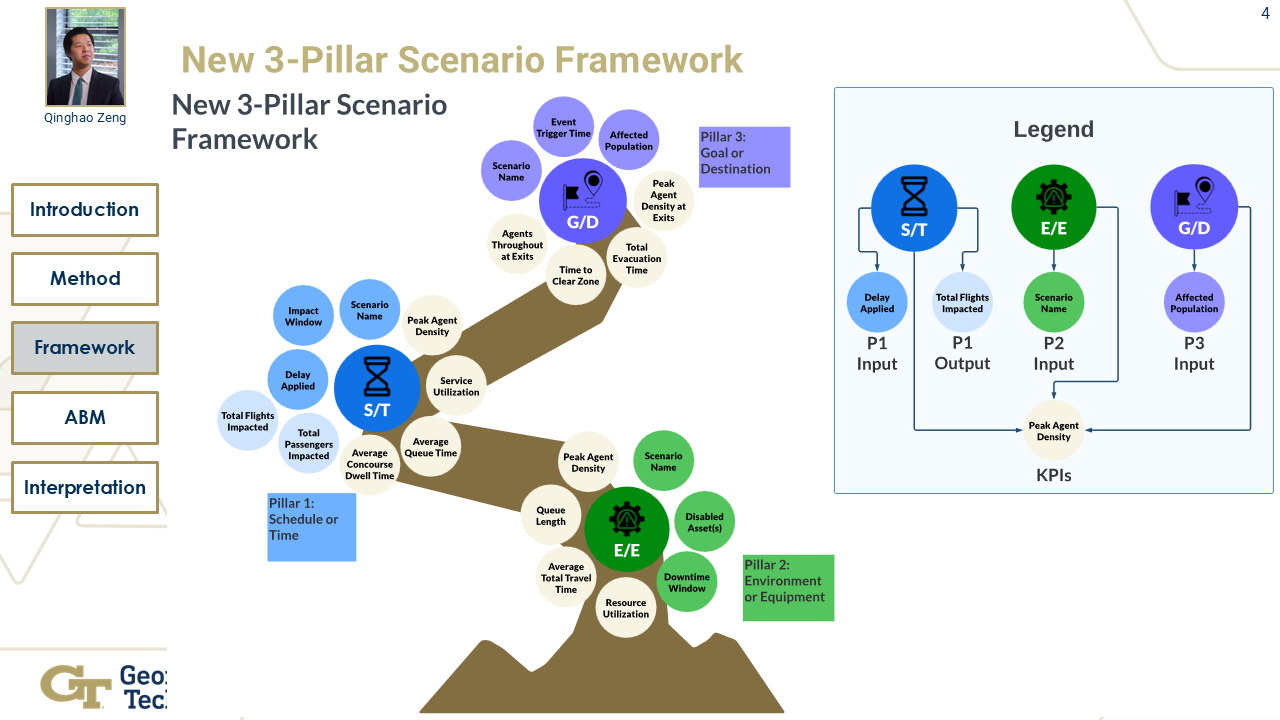
Three-Pillar Disruption Scenario Framework
The team organized airport disruptions into three interacting categories—schedule and time disruptions, environmental and equipment constraints, and changes in passenger goals—providing a structured way to stress-test airport resilience under different conditions.

03
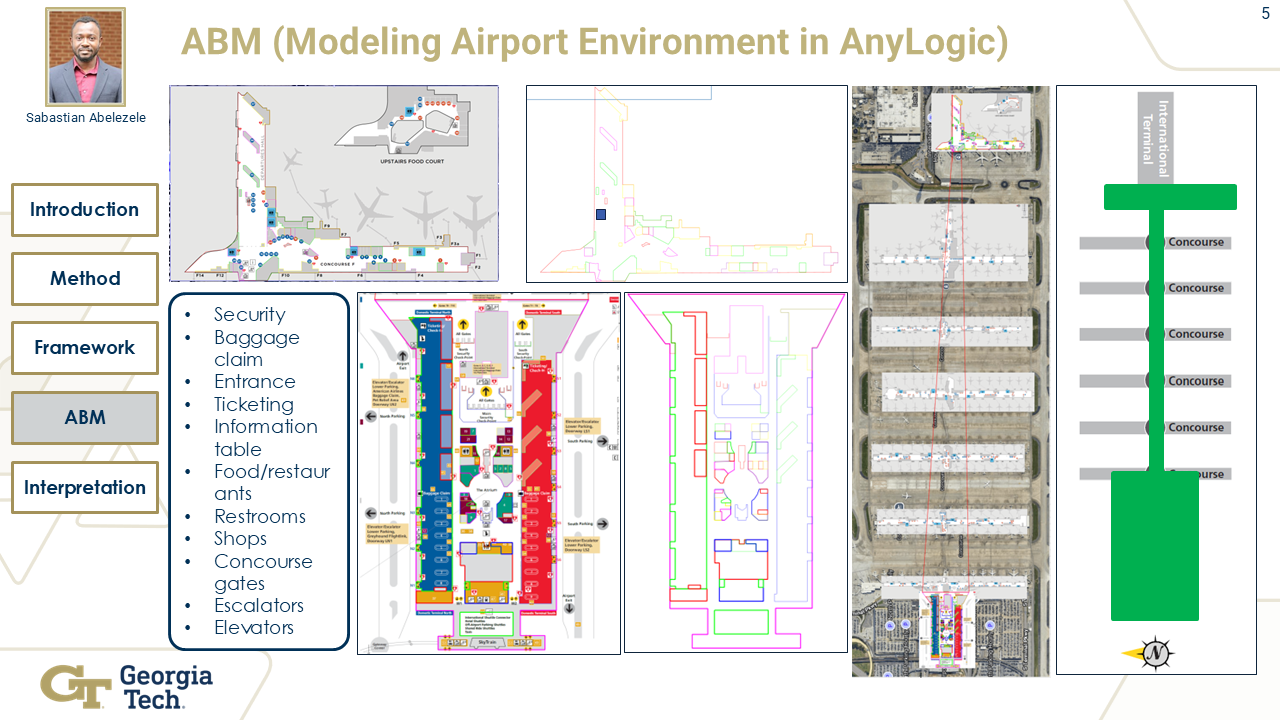
Agent-Based Airport Environment in AnyLogic
The airport environment was translated into an AnyLogic model containing passenger-service zones and operational resources, allowing agents to move through security, ticketing, baggage, gates, elevators, escalators, food, and other airport functions under changing conditions.
04
Agent-Based Simulation Demo
Simulation demonstration showing passengers moving through the modeled airport environment according to defined behaviors, service needs, routing logic, and operational conditions.

05
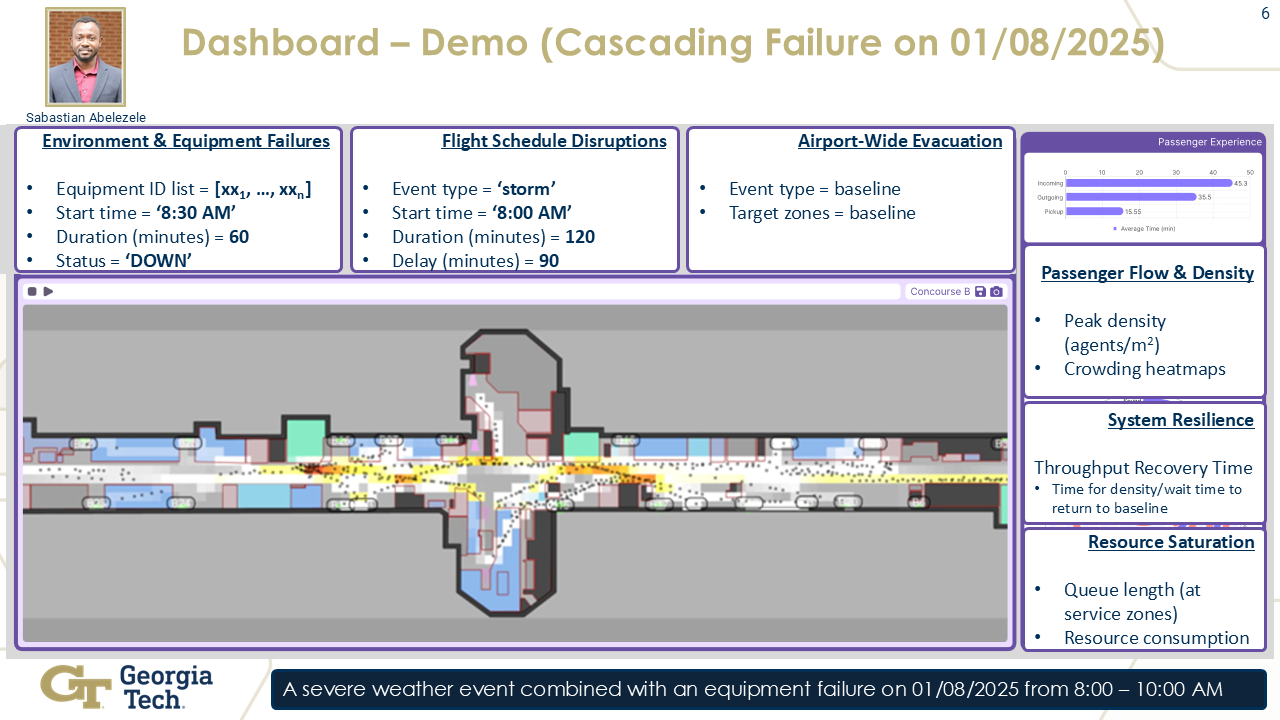
Cascading Failure & Resilience Dashboard
The digital-twin dashboard brings disruption scenarios and operational KPIs together to reveal how cascading failures affect passenger flow, density, queues, resource availability, and system recovery.

06
Interpreting Operational Resilience: Elevator Usage
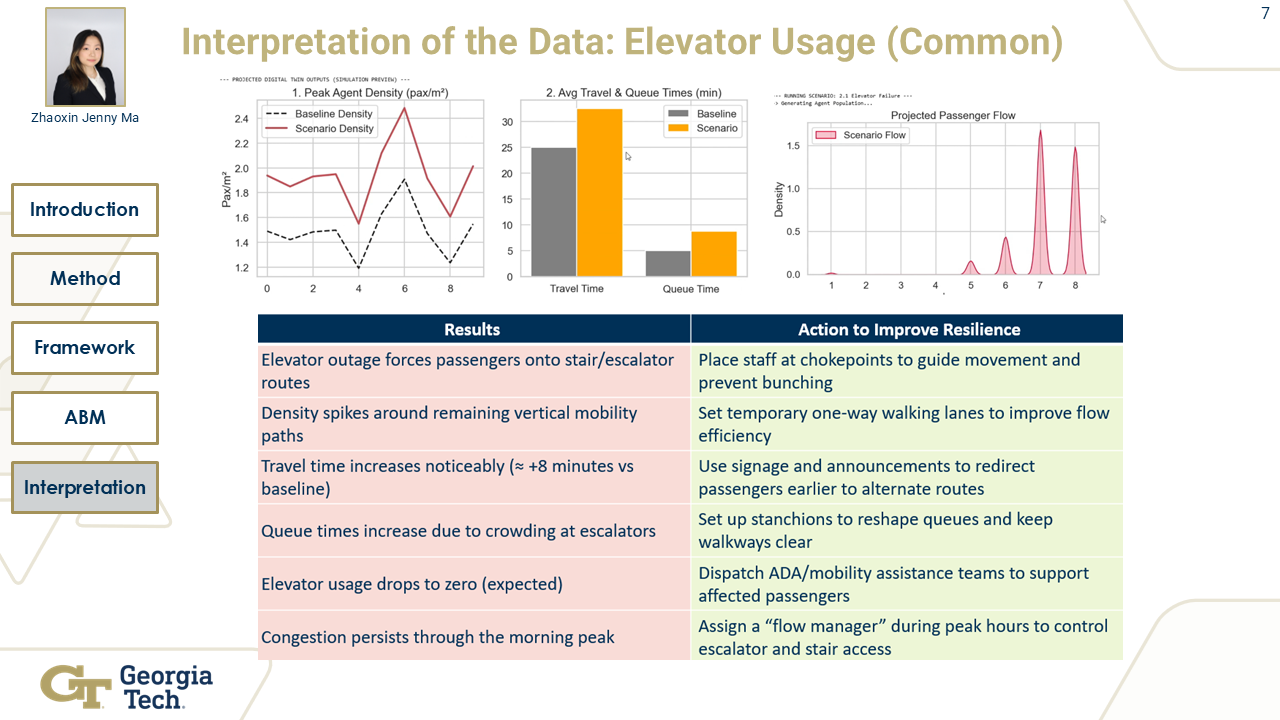
I helped translate simulation outputs into planning and operational insights. This example examines elevator demand and utilization to identify periods of stress, resource constraints, and potential vulnerabilities that may not be apparent under normal operating conditions.

07
From Simulation to Decision Support
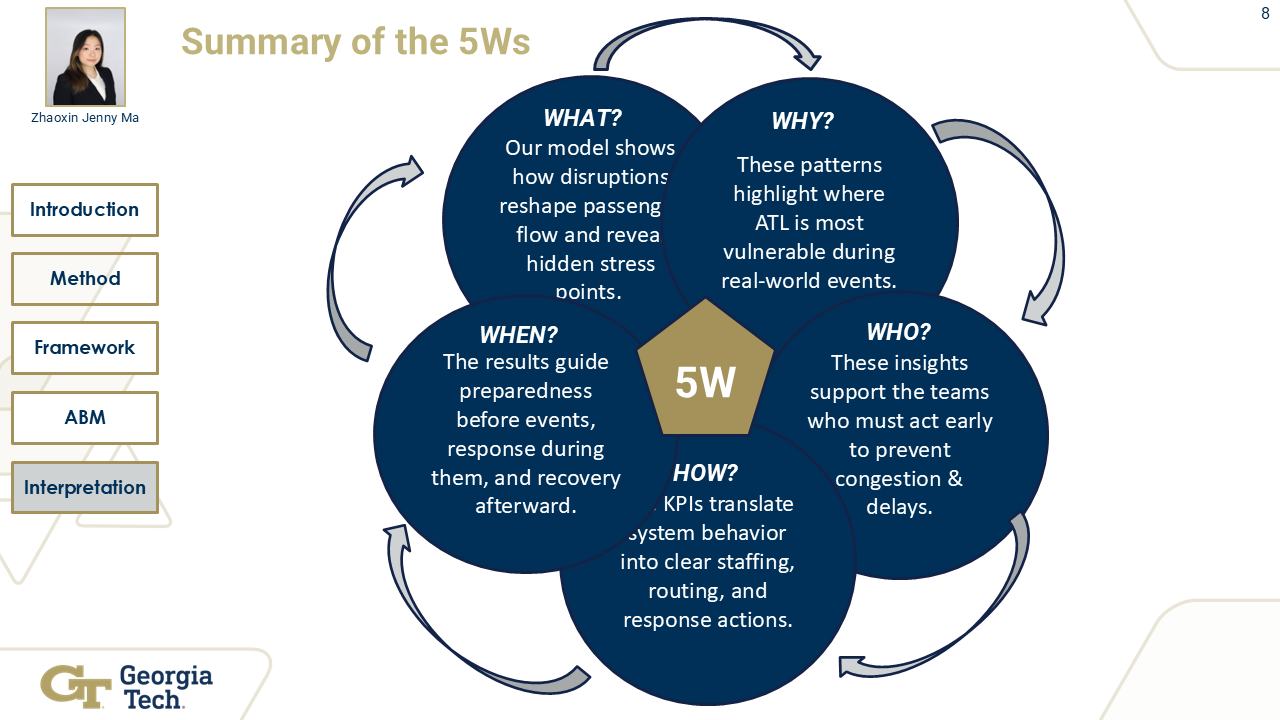
The final 5W framework translates model outputs into actionable questions: what changed, why it matters, who needs the information, when intervention is needed, and how stakeholders can respond to improve airport resilience.

08
Slide1

bottom of page