top of page
Chamblee Economic & Housing Study: Community Profile
As a Graduate Research Assistant with Georgia Tech’s Center for Economic Development Research (CEDR), I independently developed the community-profile and comparative analysis components of an ongoing economic and housing study for the City of Chamblee.
Working from the project scope and a set of peer communities selected by the project manager, I independently determined the indicators needed to tell Chamblee’s story, researched and validated data sources, pulled and organized the data, performed the analysis, created the charts and visualizations, and developed the written takeaways and presentation narrative.
The analysis spans population and demographic change, income, housing tenure and affordability, commuting, workforce characteristics, education, housing supply, vacancy, and other community conditions. I used sources including Census/ACS data, Census OnTheMap, regional population forecasts, housing datasets, and other planning and economic-development resources to compare Chamblee with DeKalb County, the Atlanta region, Georgia, and selected peer cities.
A major focus of my work was moving beyond individual statistics to identify the relationships between them, particularly Chamblee’s role as a major employment center, its substantial commuter inflow, its renter-oriented housing market, and the implications these patterns have for housing, transportation, workforce access, and redevelopment. I also supported the broader project team by validating workforce and economic-analysis data prepared by other analysts.
Project type
Economic Development & Data Analytics
Date
Spring 2026 - Present
Location
Chamblee, Georgia
Skills & Tools
Data Analytics · Economic Development · Housing Analysis · Census / ACS · Census OnTheMap · Peer Benchmarking · Workforce Analysis · Data Storytelling

01
Chamblee Economic & Housing Study: Community Profile

01
Chamblee at a Glance
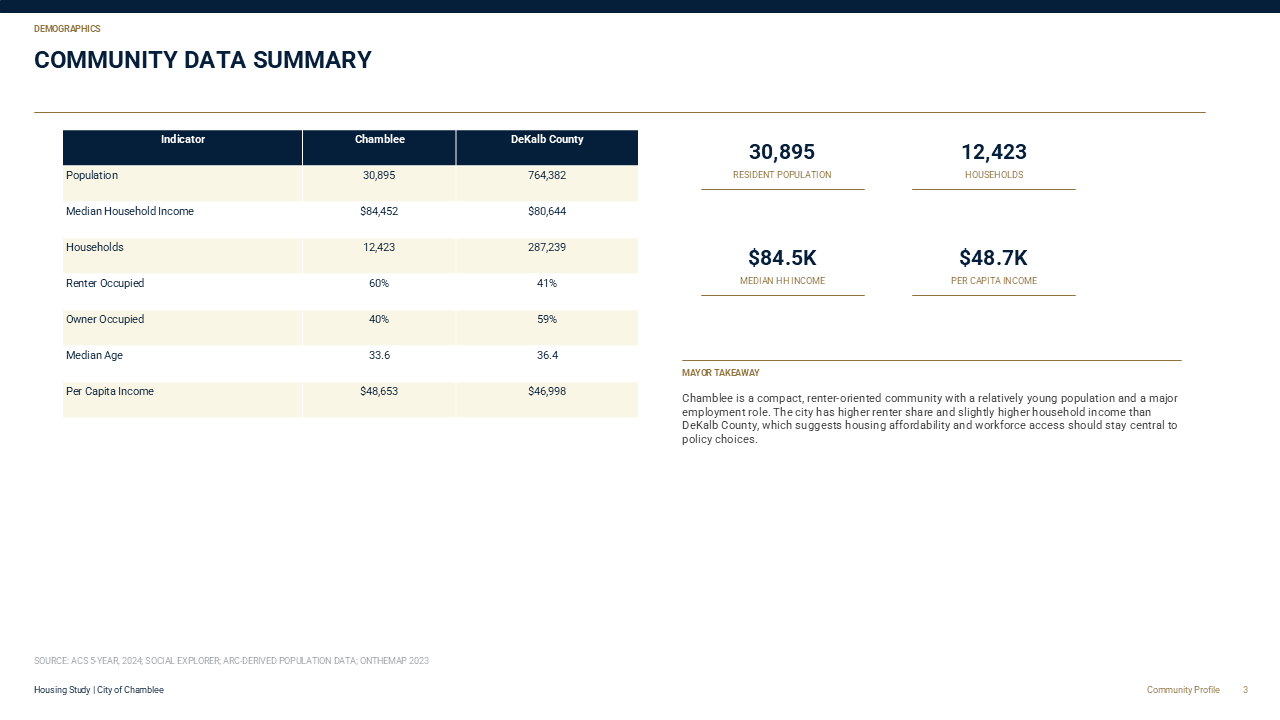
Independent community-profile analysis summarizing Chamblee’s population, income, housing tenure, age, and employment context relative to DeKalb County.

02
Chamblee as a Regional Employment Center
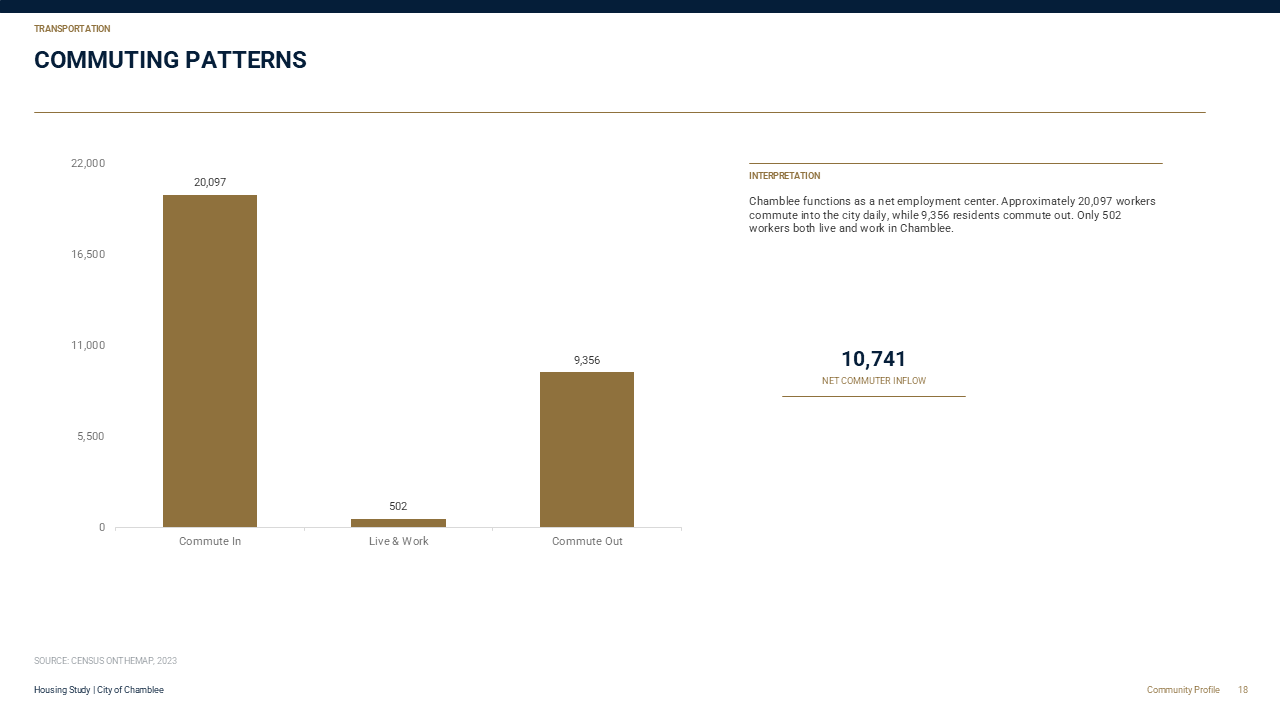
Census OnTheMap analysis shows approximately 20,097 workers commuting into Chamblee each day, compared with 9,356 employed residents commuting out and only 502 people who both live and work in the city.

03
A 35% Daytime Population Increase
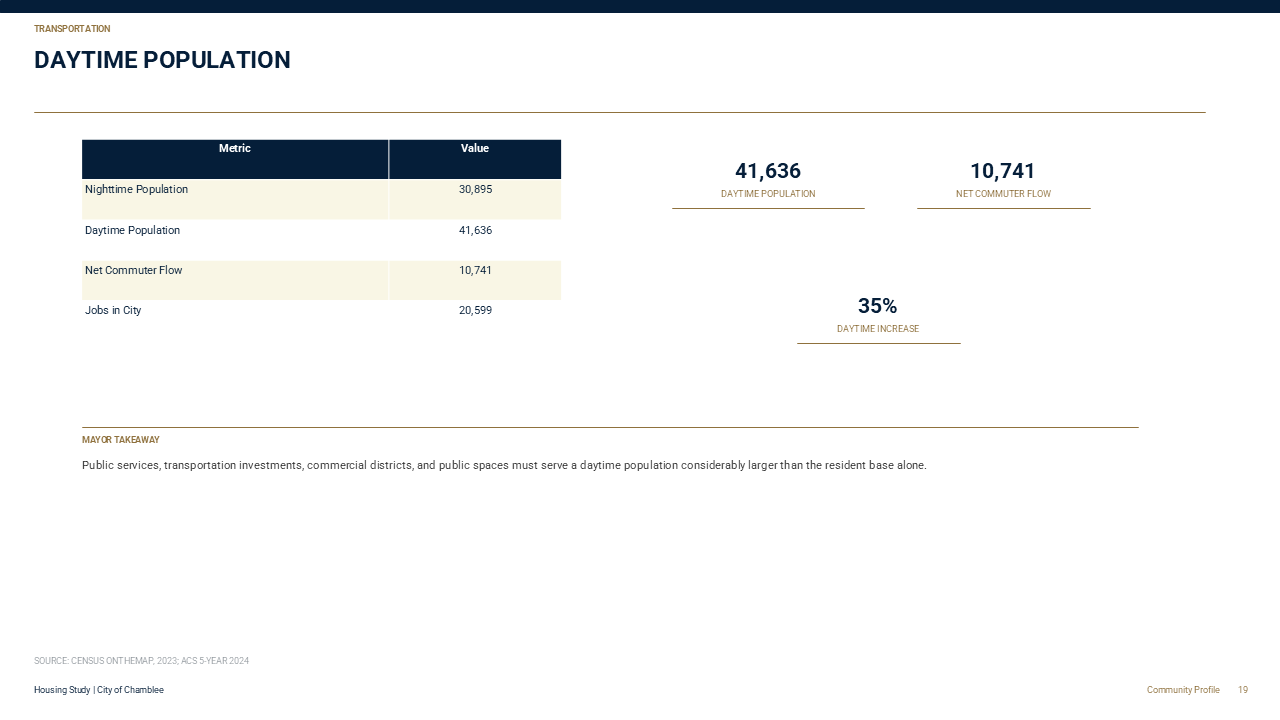
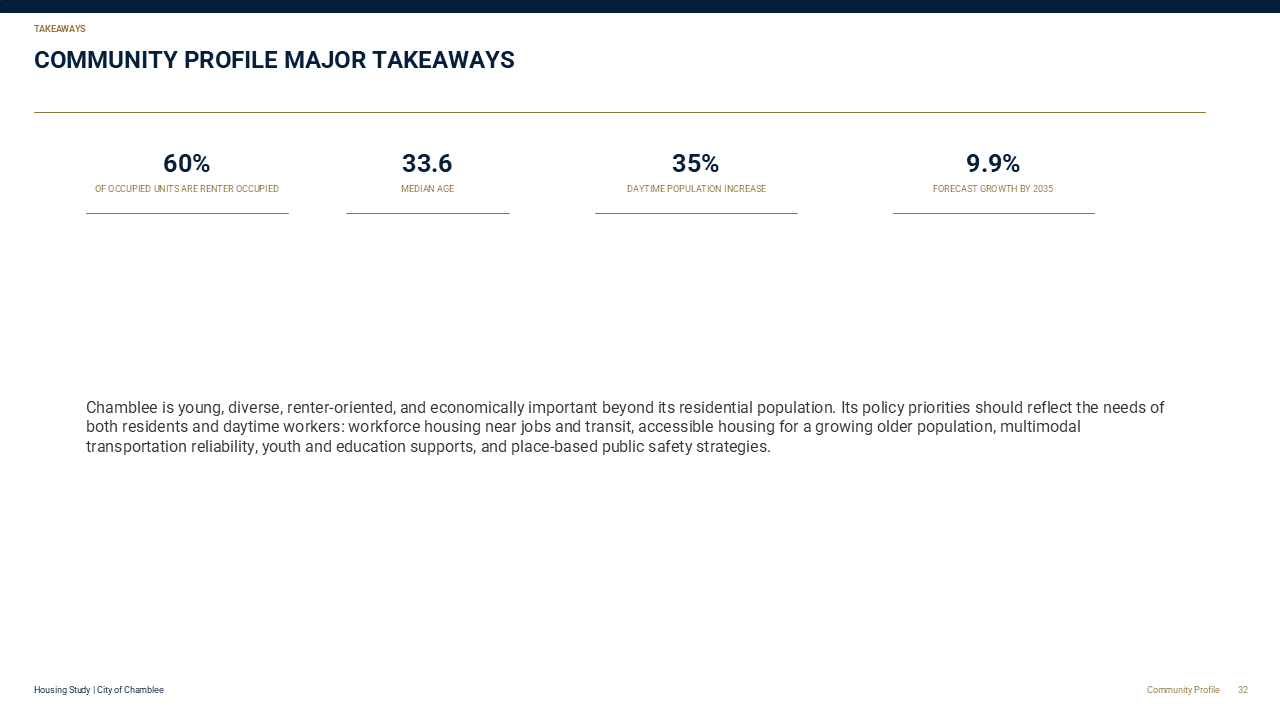
I translated commuter flows into a daytime-population estimate of 41,636—about 35% above Chamblee’s resident population, connecting workforce patterns to transportation, services, commercial activity, and job-adjacent housing needs.

04
Regional & Peer-City Benchmarking
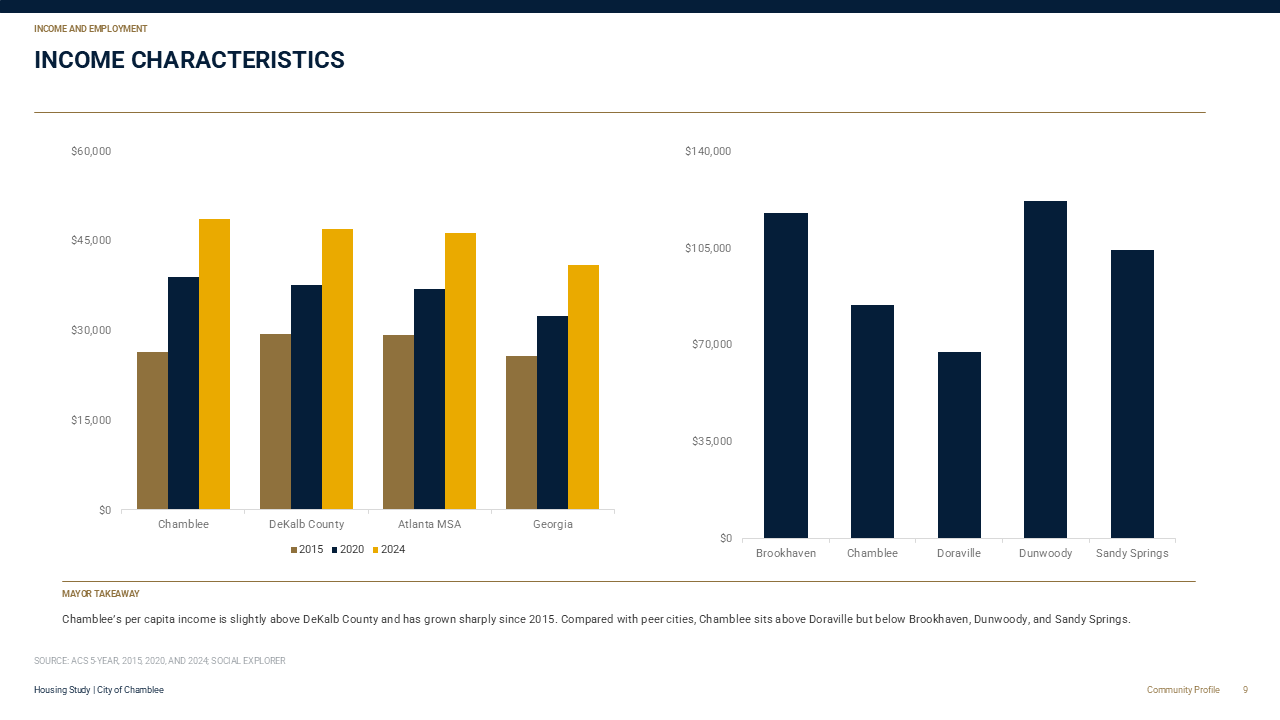
Compared Chamblee with DeKalb County, the Atlanta region, Georgia, and peer cities to place local income conditions within a broader economic context and identify Chamblee’s middle-market position.

05
Housing Affordability Through a Tenure Lens
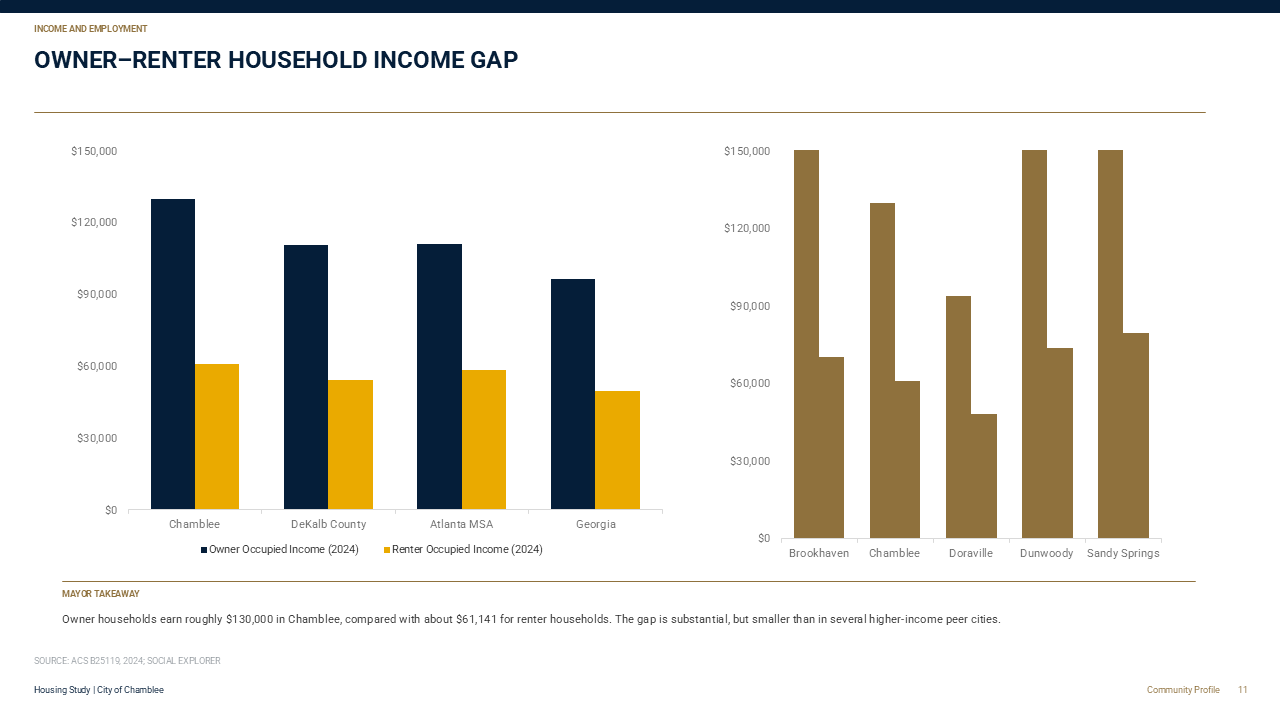
Owner households earn roughly $130,000 compared with about $61,141 for renter households. Because renters make up about 60% of occupied units, I treated this gap as an important lens for affordability and homeownership access.

06
A Renter-Oriented Housing Market
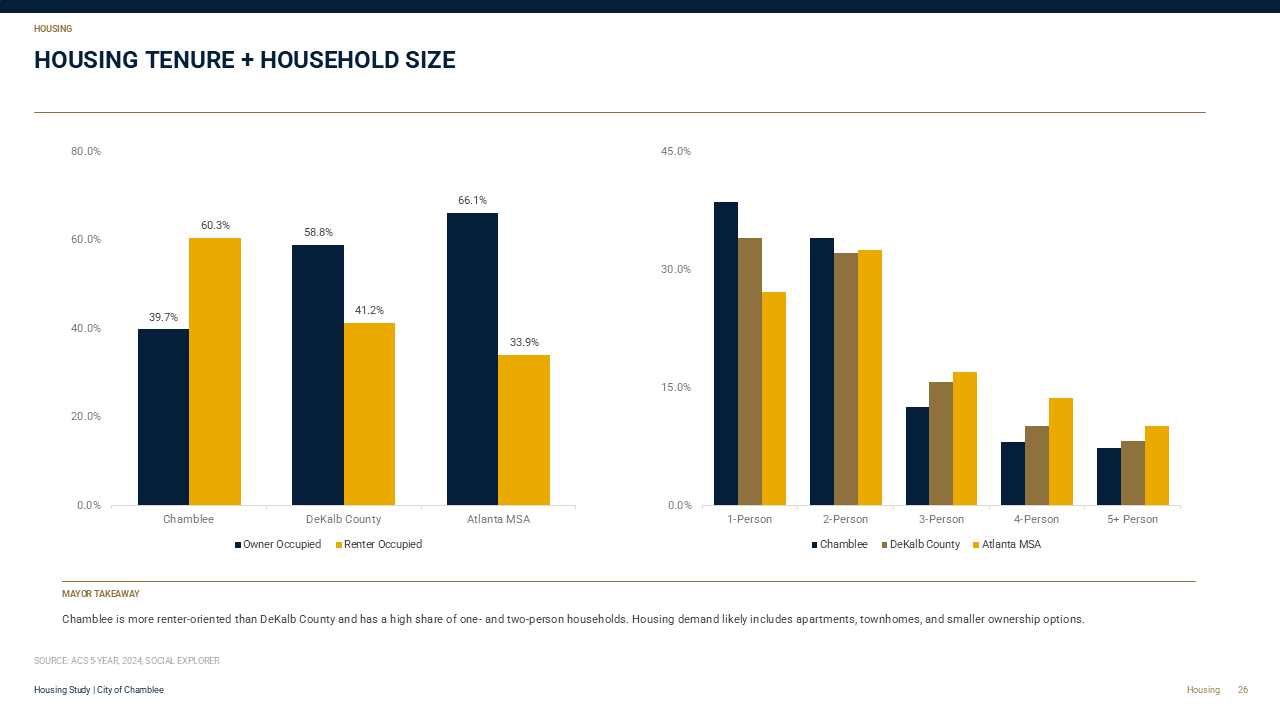
Analyzed housing tenure and household size to understand the types of housing Chamblee’s population may need. The city is substantially more renter-oriented than DeKalb County and the Atlanta region, with one- and two-person households forming most occupied households.

07
Housing Cost Burden by Income
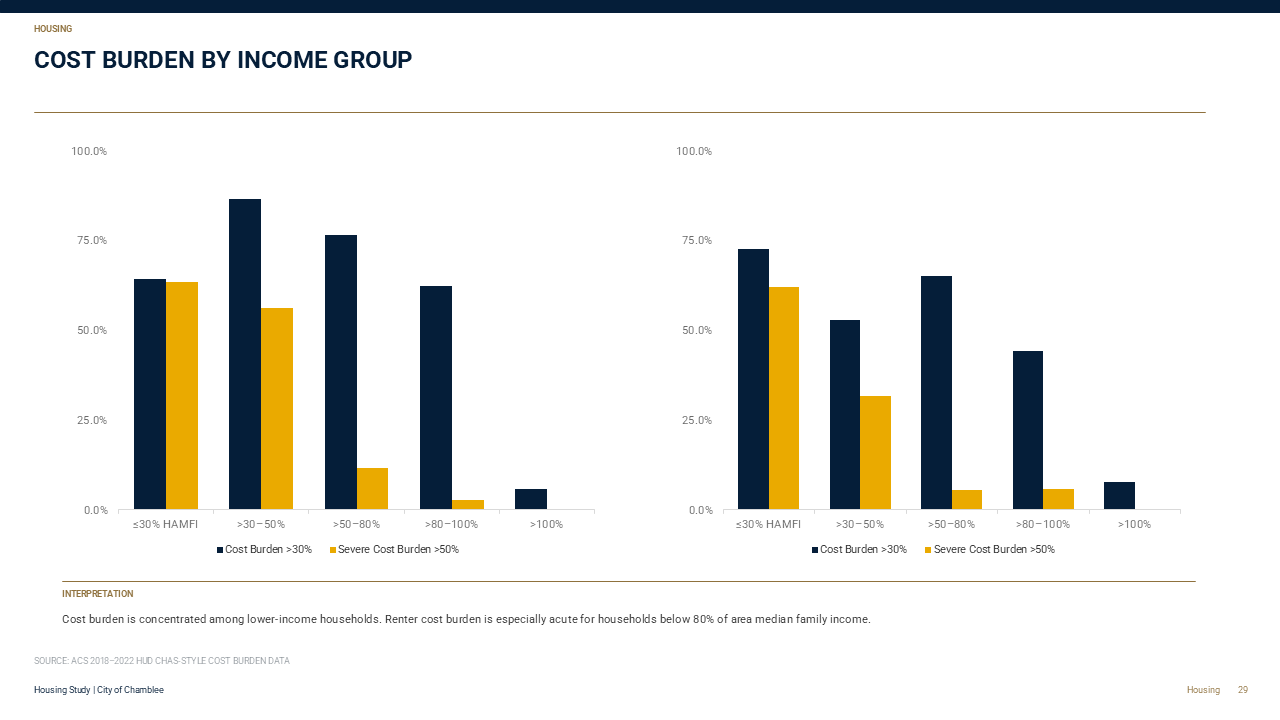
Examined affordability by income group to identify where housing pressure is most severe. Lower-income renter households show particularly high rates of cost burden, reinforcing the need to connect housing policy with income and workforce conditions.

08
Housing Supply & Urban Form
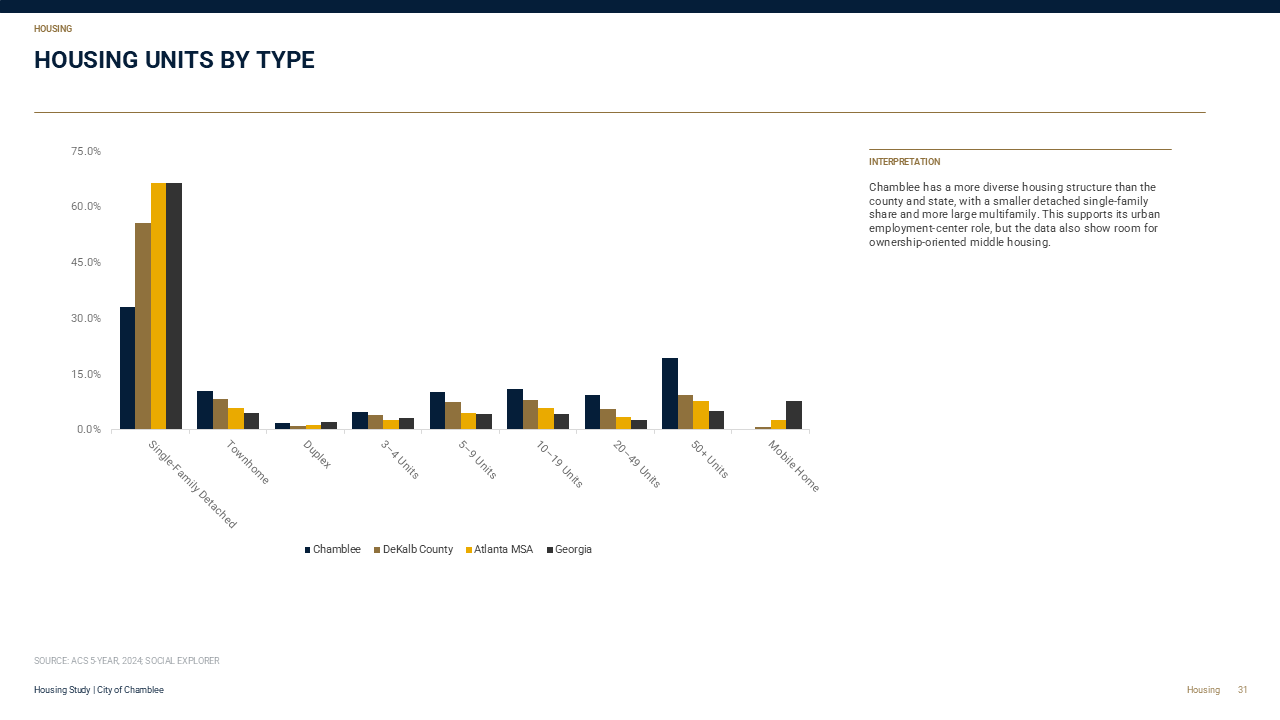
Compared Chamblee’s housing structure with larger geographies, showing a lower detached single-family share and substantially more multifamily housing, an important characteristic of its urban employment-center role.

09
From Data to Planning Priorities
I synthesized the profile into a concise planning narrative: Chamblee is young, diverse, renter-oriented, and economically important beyond its residential population, with key implications for workforce housing, transit access, affordability, aging residents, and redevelopment.
bottom of page