top of page
Georgia AIM: AI, Workforce & Regional Analytics
As a Graduate Research Assistant with Georgia Tech’s Center for Economic Development Research (CEDR), I contributed to Georgia AIM, a multiyear statewide initiative focused on artificial intelligence adoption, workforce readiness, regional economic development, infrastructure, and community capacity across Georgia.
My role combined GIS, R programming, economic and workforce research, data validation, interactive visualization, regional analysis, and technical communication. I supported regional profiles, AI101 training and outreach, stakeholder research, workforce and education analysis, statewide mapping, and the development and validation of data used in public-facing Georgia AIM products.
A major component of my work involved translating complex datasets and policy criteria into usable spatial tools. I calculated and validated county-level EDA economic-distress investment levels and combined them with persistent-poverty and rural-status indicators for statewide analysis. This work helped support the economic-distress data presented through Georgia AIM’s public mapping and planning materials.
I also developed interactive R/Leaflet tools for regional vacancy analysis. An initial Census-tract vacancy explorer created for the River Valley region generated enough interest that the workflow was adapted for another regional commission, demonstrating how reusable open-source mapping tools can support regional economic-development decision making.
Across Georgia AIM, my work focused on making statewide and regional data easier to interpret, communicate, and apply — from federal economic-distress criteria and workforce pipelines to AI training activity and interactive GIS applications!
Project type
AI, Workforce & Regional Analytics
Date
August 2024 - Present
Location
Georgia
Explore Georgia AIM →
Skills & Tools
GIS • R • Leaflet • Interactive Mapping • Workforce Analysis • Economic Development • EDA Distress Analysis • Data Validation

01
Georgia AIM: AI, Workforce & Regional Analytics

01
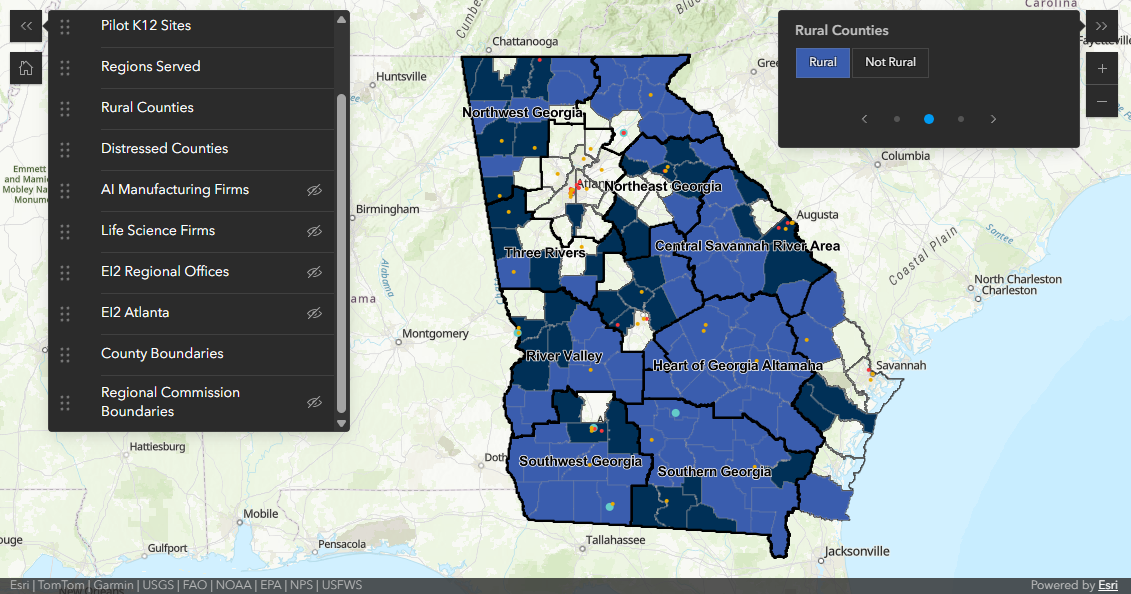
Mapping Georgia AIM Across the State
I developed the interactive GIS map used on CEDR’s public Georgia AIM webpage to communicate program activity and regional engagement across Georgia. The map translates a complex statewide initiative into an accessible spatial interface for partners and the public.

02
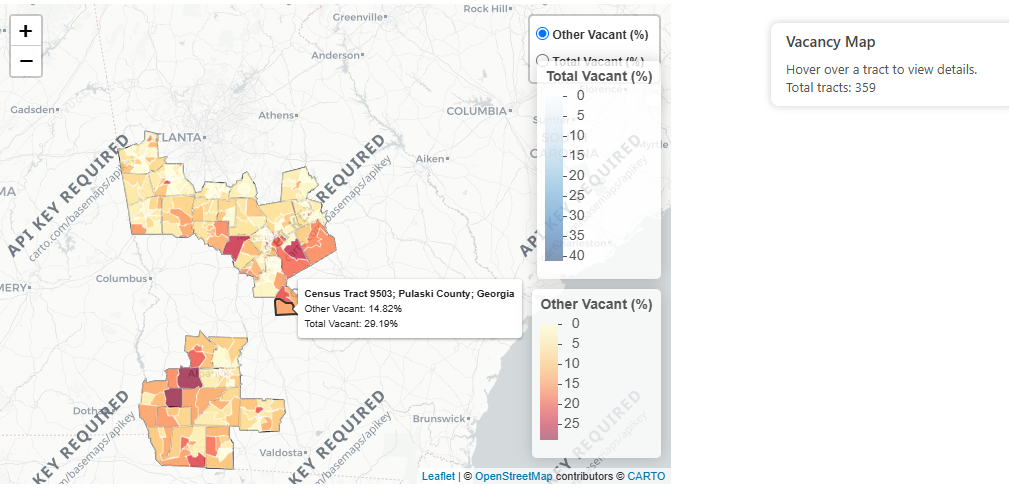
Interactive Census-Tract Vacancy Explorer
I developed an interactive R and Leaflet application that allows regional partners to explore Census-tract vacancy patterns spatially rather than through static tables. The tool was initially created for the River Valley region and generated enough interest that another regional commission requested a similar application.

03
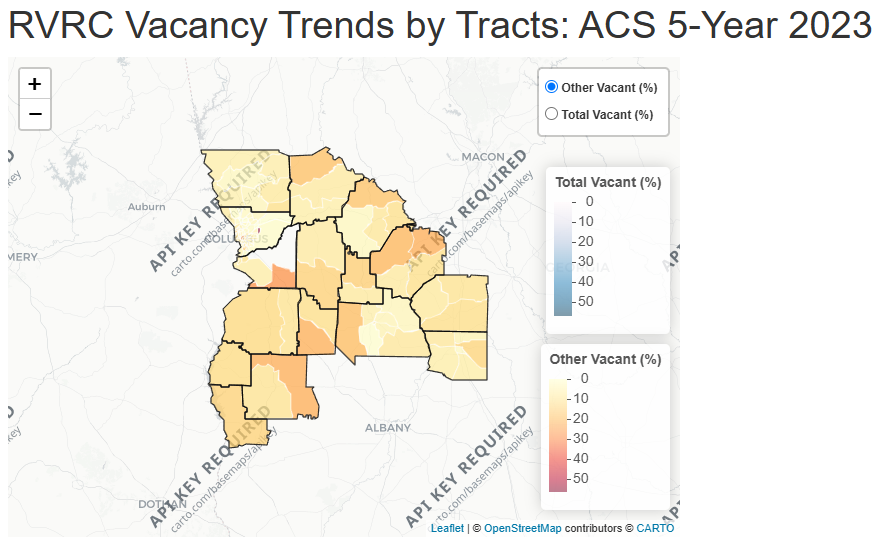
Scaling the Interactive Mapping Workflow
Following interest in the original vacancy explorer, I adapted the R/Leaflet workflow for another regional commission. This demonstrated how a reusable open-source mapping approach could be transferred across regions with different geographies and planning needs.

04
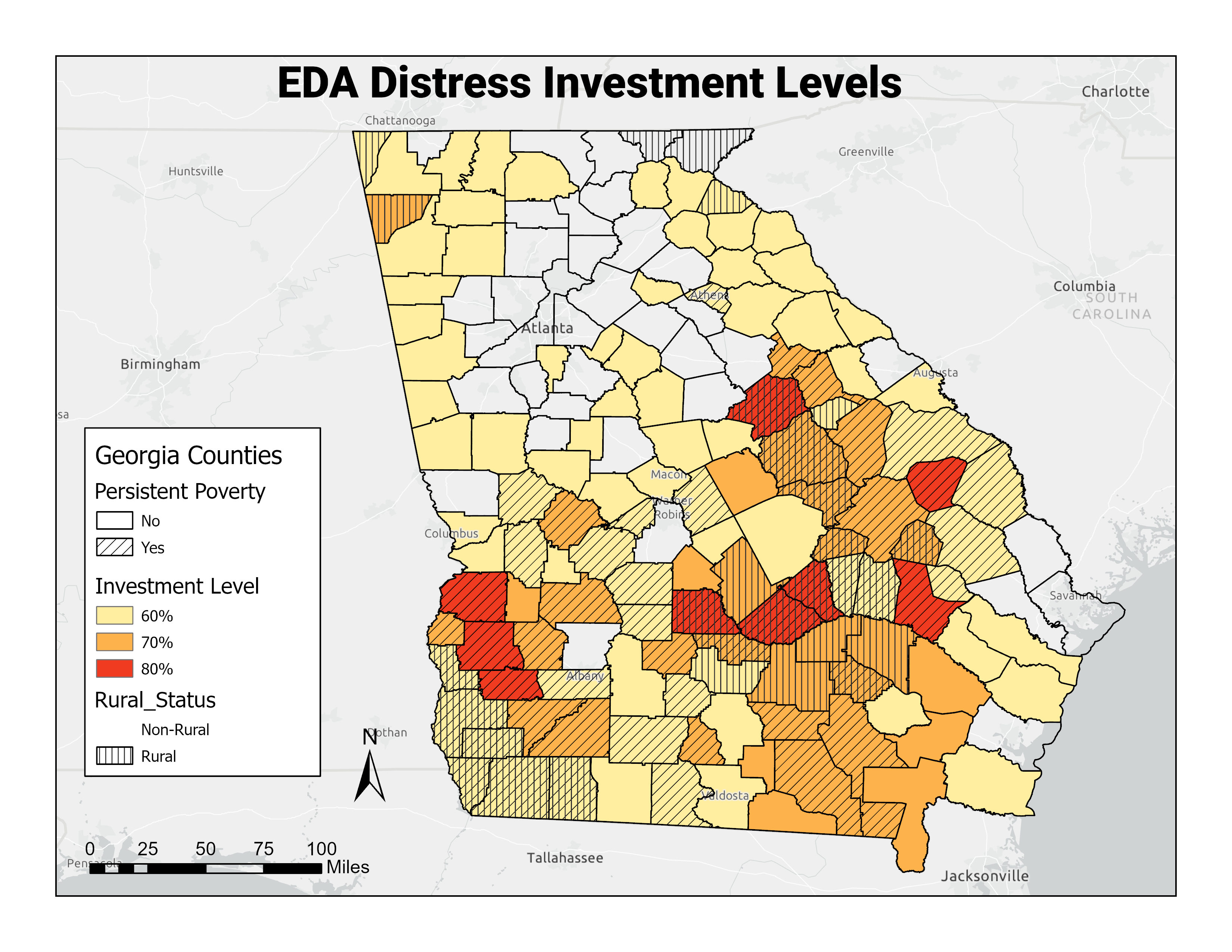
EDA Economic Distress & Federal Investment Eligibility
I calculated and validated county-level EDA economic-distress investment rates and integrated them with persistent-poverty and rural-status indicators. This required translating federal eligibility criteria into county-level data, validating the results with the Georgia AIM project team, and preparing the spatial dataset used to support statewide Georgia AIM mapping and analysis.

05
AI101 Training & Statewide Engagement
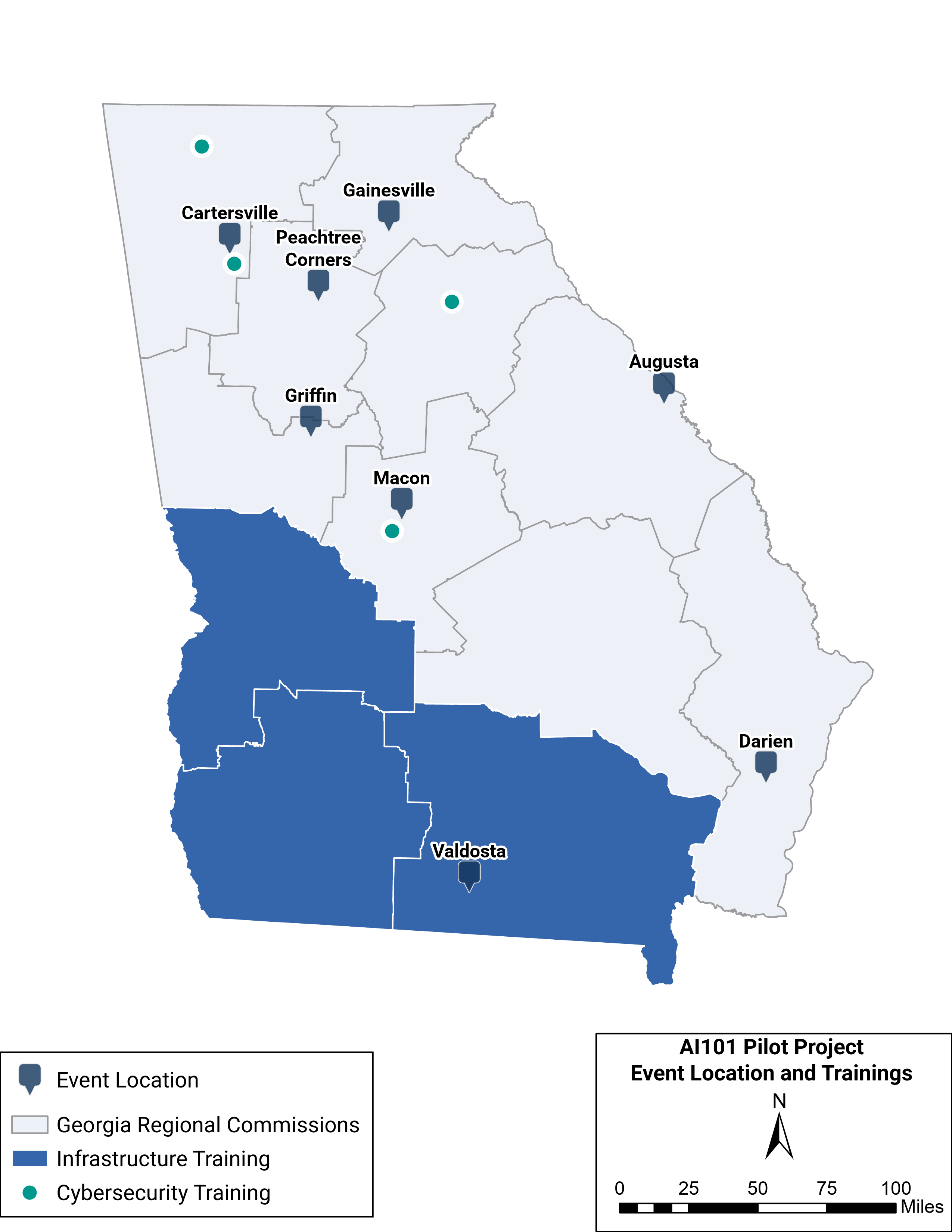
I mapped AI101 trainings and related regional activity to communicate the geographic reach of Georgia AIM’s AI-literacy and community-engagement efforts across the state.

06
Technical College Workforce Pipeline
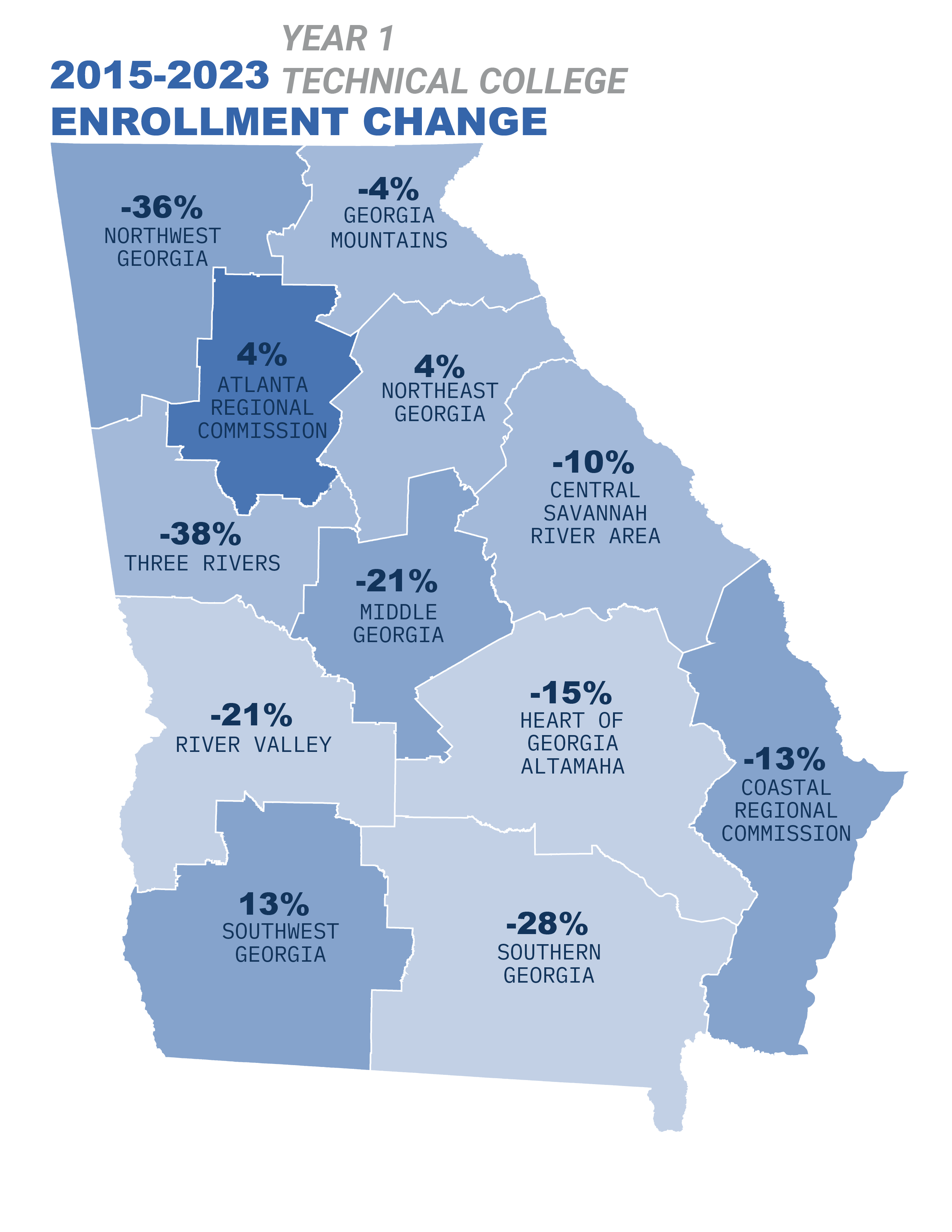
I analyzed and visualized Technical College System of Georgia enrollment patterns (2015-2023) to help connect regional education capacity with workforce development, manufacturing, cybersecurity, and emerging AI-related skill needs.

07
Translating AI for Community Audiences
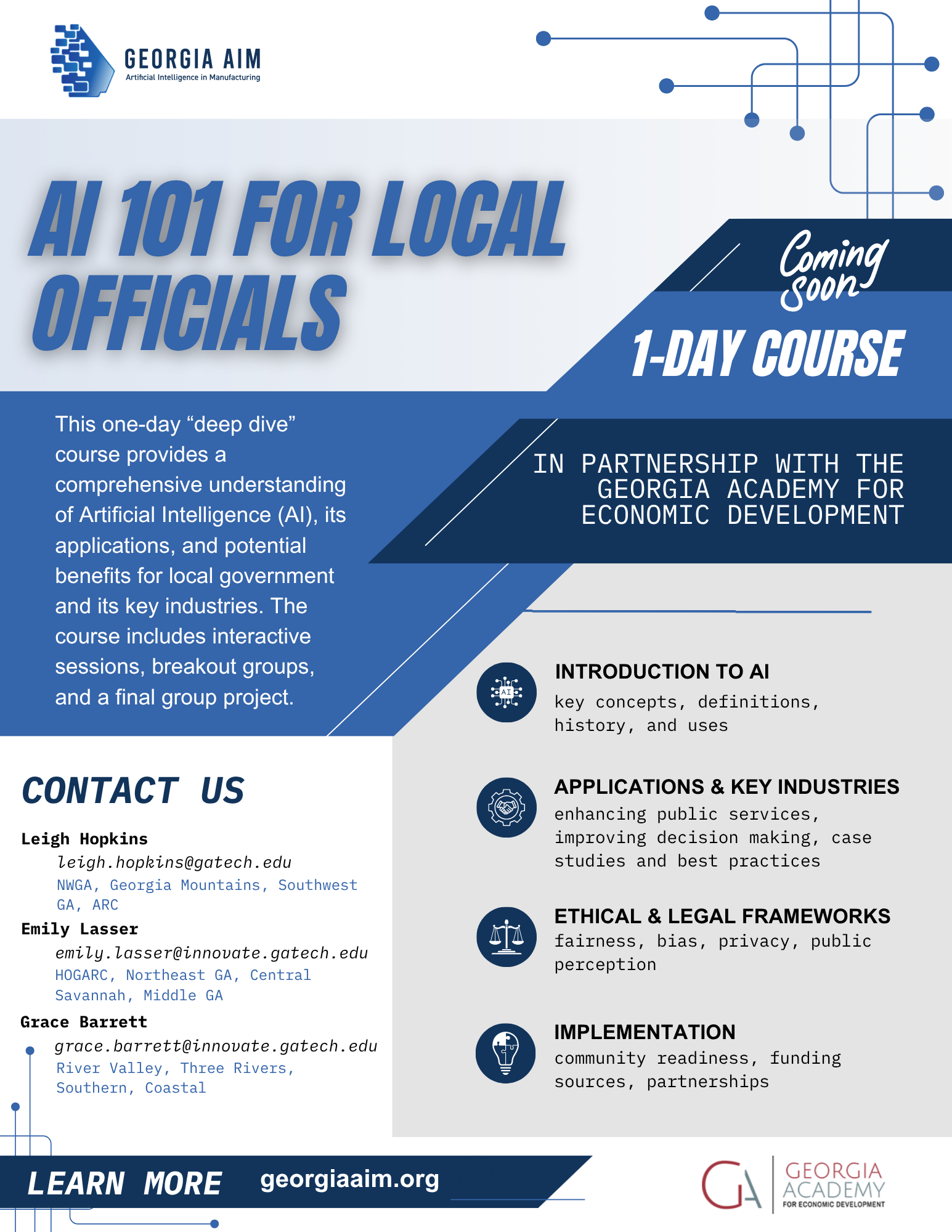
I supported AI101 outreach and public-facing communication designed to make artificial intelligence and its economic-development implications more accessible to local officials, regional partners, and community stakeholders.
bottom of page